
RF Energy Applications: Where Solid-State Microwave Technology Is Creating New Possibilities
 Radio frequency energy is moving beyond traditional microwave heating. Today, solid-state RF and microwave technology is enabling a new generation of systems where power can be controlled with far greater precision, flexibility and repeatability.
Unlike legacy magnetron-based sources, solid-state RF energy allows engineers to adjust frequency, power level, phase and modulation with a high degree of control. This makes RF energy especially valuable in applications where process stability, energy delivery and system reliability are critical.
What makes solid-state RF energy different?
In many conventional microwave systems, the energy source is a magnetron. Magnetrons have been widely used for decades, but they offer limited controllability and their output can degrade over time. For industrial and scientific processes, this can create challenges in terms of repeatability, maintenance and process optimization.
Solid-state RF energy changes the equation. By using transistor-based technology, RF systems can react faster, deliver more stable power and adapt to changing application conditions. For engineers and system designers, this opens the door to more intelligent RF energy delivery.
Key RF energy applications
Plasma applications
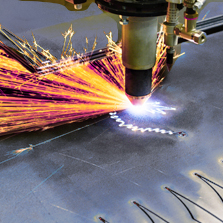
RF and microwave plasmas are used across a wide range of technical and industrial processes, including semiconductor processing, chemical processes, metal cutting, surface activation and cosmetic applications.
In plasma environments, the ability to control energy delivery is essential. Small changes in RF power, frequency or matching conditions can influence plasma behavior, process repeatability and final results. This is why RF generators and solid-state microwave systems play such an important role in advanced plasma applications.
Industrial heating and drying
 Industrial heating is one of the clearest examples of RF energy’s practical value. Microwave ovens can provide volumetric heating, helping materials heat faster and more uniformly than with some conventional techniques.
This is especially relevant in applications such as food processing, pasteurization and material drying. With solid-state RF sources, the process can benefit from improved lifetime, reduced unscheduled downtime and more precise energy control compared with traditional magnetron-based systems.
Plasma lighting
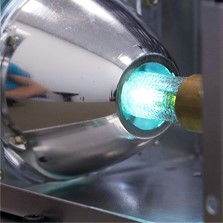 Plasma lighting uses microwave fields to excite the contents of a small glass bulb, producing light. The emitted spectrum depends on the gases and minerals inside the bulb.
By replacing magnetron tubes with solid-state RF energy sources, plasma lighting systems can gain more controllability. This can enable features such as dimming and more precise power adjustment, making the technology more flexible for specialized lighting applications.
Medical applications: hyperthermia and ablation
 RF energy also has important potential in medical technology. In hyperthermia treatment, microwave power is used to increase tissue temperature locally. In ablation, RF or microwave energy can generate heat to treat tumor tissue or other dysfunctional tissue.
These applications require a high level of control. The goal is not simply to generate heat, but to deliver energy with precision. Solid-state RF technology supports this need by enabling controlled and stable energy delivery.
Cooking, defrosting and food processing
 RF energy is also relevant in consumer and commercial cooking, defrosting and food processing. The main advantage is not just speed, but control.
In changing food loads, traditional microwave energy delivery can be difficult to regulate. Solid-state systems can offer more adaptive control, helping improve consistency and process efficiency in cooking and thawing applications.
New RF energy applications
The potential of RF energy is still expanding. Automotive ignition, novel lighting, advanced medical systems and other emerging applications are all being explored as solid-state RF technology becomes more accessible and economical.
For companies developing new RF-powered products, the key challenge is often not only choosing a generator, but designing the complete system around it: the RF source, applicator, matching, control software, safety architecture and user interface.
Why control is the real advantage
Across all these applications, the common denominator is control.
RF energy is not just about delivering power. It is about delivering the right power, at the right frequency, in the right way, to achieve a specific process result. This is where solid-state RF and microwave generators become especially valuable.
With programmable RF generators, multi-channel architectures, real-time monitoring and application-specific control, engineers can move from “power delivery” to true process optimization.
Building complete RF energy systems
A successful RF energy application requires more than a generator. It needs the right combination of RF building blocks, applicators, software, system design and application knowledge.
pinkRF helps to develop RF energy systems and microwave building blocks for industrial, medical, pharmaceutical and scientific applications. From low-power single-channel systems to multi-channel high-power RF energy sources, the objective is to help OEM companies turn RF energy into reliable, controllable and scalable solutions.
Conclusion
Solid-state powered RF energy applications are growing because industries need more precise, reliable and adaptable ways to deliver energy. From plasma and industrial heating to medical treatments, lighting and food processing, solid-state microwave and RF technology is helping replace legacy limitations with new levels of control.
For engineers and companies exploring RF energy, the opportunity is clear: the future of microwaves and RF is no longer about more power. It is about smarter power.
Frequently Asked Questions
What are RF energy applications?
RF energy applications are industrial, scientific, medical or commercial uses where radio frequency or microwave energy is used to heat, activate, process or treat materials.
What is the advantage of solid-state RF energy?
Solid-state RF energy offers greater control over power, frequency, phase and modulation compared with traditional magnetron-based systems.
Where is RF plasma used?
RF and microwave plasma can be used in semiconductor processing, chemical processes, metal cutting, surface activation and other advanced technical applications.