100 Days as CEO of pinkRF: Listening, Aligning, and Setting the Course for Growth
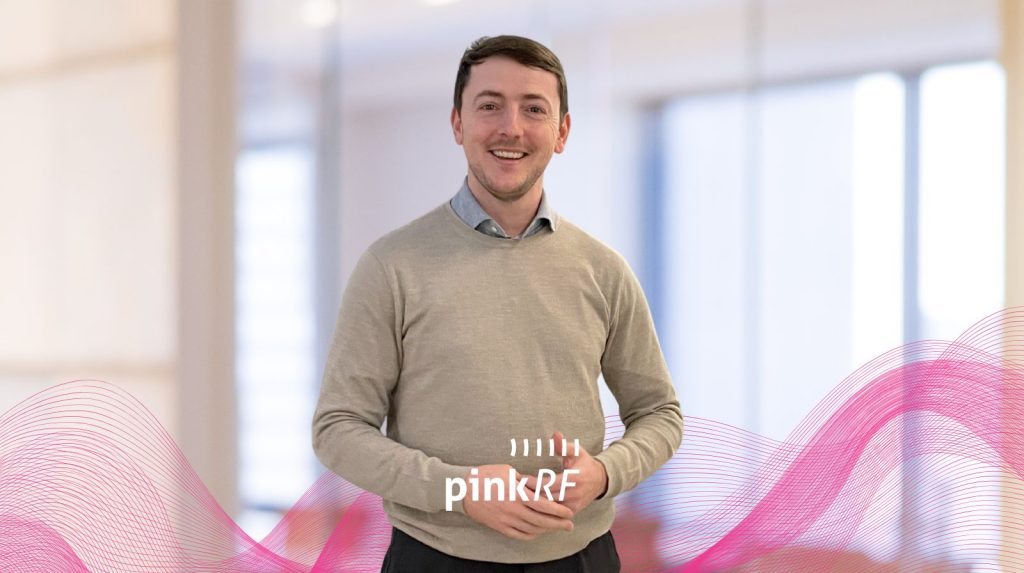
By Valter Andreis, CEO of pinkRF
One hundred days ago, I stepped into the role of CEO at pinkRF.
It’s been intense, at times messy, often energizing, and above all, clarifying. These first months are never about having all the answers. They’re about asking the right questions, listening carefully, and starting to make a few key decisions.
This is a reflection on what I’ve seen so far, what surprised me, and where we’re heading.
Why pinkRF, Why Now
When I joined pinkRF, it was clear that the company had something special.
The team has spent years working on solid-state RF energy, solving problems that are far from trivial. What stood out to me early on was not just the technical depth, but how often customers rely on that expertise to solve challenges they couldn’t solve elsewhere.
At the same time, the broader market is shifting.
Electrification is accelerating. Sustainability is no longer optional. And many of the systems currently in use, especially magnetron-based ones, are starting to show their limits.
That combination creates a real opportunity.
But I’ve seen before that having the right ingredients is not enough. What matters is whether you can turn that into something scalable and repeatable.
The First Priority: Listen Before You Act
In the beginning, I deliberately slowed myself down.
It is tempting as a new CEO to come in and start changing things immediately. But in most cases, you first need to understand what is really going on beneath the surface.
So I spent a lot of time talking. With the team, with customers, with partners.
Some things confirmed my expectations. Others did not.
What became very clear is that pinkRF has a rare level of technical capability. What impressed me most was not just the knowledge itself, but the way people approach problems. There is a strong sense of ownership, curiosity, and pride in getting things right.
At the same time, I also saw the friction that comes with working in a very R&D driven way. Projects that are hard to scale, priorities that compete, and a lot of knowledge that is not always translated into repeatable products.
That tension is not a weakness. But it does need to be addressed.
The Shift We Need to Make
One of the clearest conclusions from these first 100 days is simple: we need to move from being primarily R&D driven to becoming more product led.
That sounds simple, but in practice it is a significant shift.
It means making choices. Not doing everything. Deciding where we standardize, where we customize, and where we say no.
It also means taking what we already do well, our core RF technology and control, and turning it into platforms that can be used again and again, instead of starting from scratch each time.
We have made a conscious decision to move in that direction. Not overnight, but step by step.
A simple example of this shift came up early on.
In one of my first customer discussions, we were asked to support a highly customized solution, something we are very capable of doing. In the past, we would likely have approached it as a one off development.
Instead, we challenged ourselves. Can this be part of a broader platform?
That changed the conversation internally. Rather than solving just that one problem, we started defining a solution that could be reused across multiple customers with similar needs. It required more upfront thinking, and not everyone was immediately comfortable with it. But it is exactly the kind of discipline we need if we want to scale.
Where We See Real Opportunities
Through discussions with customers and partners, a few areas keep coming back.
Plasma applications are growing fast, especially in semiconductor and advanced material processes.
Industrial heating is another area where the shift toward more controllable and efficient energy solutions is clearly underway.
In many of these cases, customers are dealing with legacy systems that are becoming harder to maintain and less predictable in performance.
What I have learned is that the conversation is often not just about power.
It is about control.
What Makes the Difference
We are often asked about efficiency or performance, and those are important.
But what matters more in practice is how a system behaves over time, in real conditions.
Does it adapt when the process changes? Does it stay stable? Does it reduce the need for manual intervention?
This is where our focus on intelligent RF control comes in.
Instead of treating the generator as a fixed output device, we see it as something that continuously adjusts, learns, and optimizes during operation.
It is a more complex approach, but it is also where we see the most value for customers.
Building the Company Around It
Technology alone does not scale. Organizations do.
And ultimately, it comes down to people. What gives me confidence is the team we have today. People who go deep technically, but are also open to change and willing to challenge how we work. That combination is not easy to find.
As we grow, we are looking for more people who want to be part of that journey. People who enjoy solving complex problems, but who also want to see their work translated into real products used in the field.
Over the past months, we have started putting more structure in place. Not to slow things down, but to make sure we can move faster in a consistent way.
We are becoming clearer about where we focus, which opportunities we pursue, and how we bring solutions to market.
We are also working on how we collaborate internally. Creating more ownership, reducing unnecessary complexity, and making it easier for teams to execute.
This is still work in progress. And it will take time to get right.
The Road Ahead
If the first 100 days were about understanding and aligning, the next phase is about execution.
We will not get everything right immediately. That is part of building something real.
But we are clearer now on what matters
- where we want to play
- how we differentiate
- and what we need to build to get there
The shift toward solid state RF is happening. The question is not if, but how fast and how well it can be implemented in real applications.
Our role is to make that transition easier, more reliable, and more impactful for the people who depend on these systems every day.
Personally, I am excited about what we are building, not because it is easy, but because it is meaningful and has real potential.
And that is what makes this journey worth it.
If you enjoy working at the intersection of deep technology and real world applications, and you want to help shape how solid state RF is applied in industry, we would like to hear from you.